Scale on Demand: Handle Your Busy Season Without Overpaying the Rest of the Year
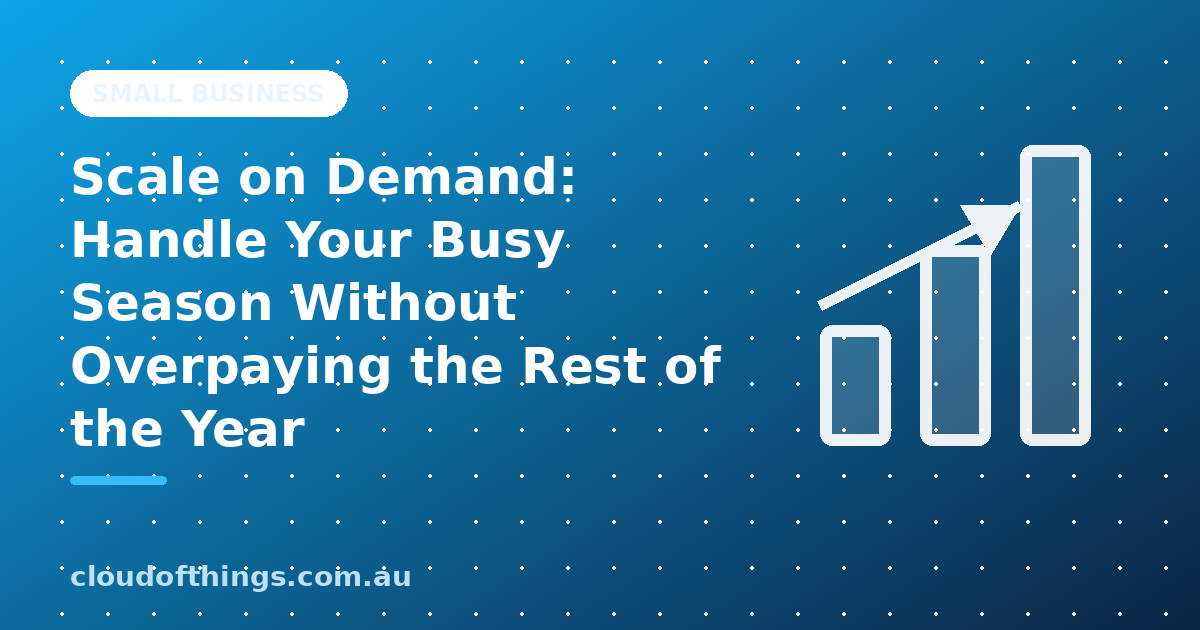
Cloud elasticity lets a small business absorb a holiday rush or a viral moment automatically — then scale back down so you never pay for capacity you don't need.
Every small business has peaks: the pre-Christmas rush, an end-of-financial-year surge, a product that suddenly gets attention. The old way to prepare was to buy enough hardware to survive your busiest hour and pay for it all year round. Cloud computing offers a smarter option — capacity that grows and shrinks with demand.
What "elastic" actually means
Elastic infrastructure adds resources automatically when traffic climbs and removes them when things quieten down. If your online store gets ten times its normal visitors during a sale, the cloud spins up extra capacity in minutes so the site stays fast — then releases it afterwards so you stop paying. You get the performance of a big operation only when you need it.
Why this matters for a growing business
Under-provisioning means outages and lost sales at exactly the wrong moment. Over-provisioning means paying every month for headroom you rarely use. Elasticity removes that trade-off, which is a large part of why productivity and flexibility are consistently the top reasons small businesses move to the cloud. You can say yes to growth without a nervous conversation about whether your servers will cope.
Getting it right
Good scaling doesn't happen by accident. Set sensible minimum and maximum limits so a traffic spike — or a bug — can't run up a surprise bill. Test how your systems behave under load before your busy season, not during it. And lean on managed services that handle scaling for you, so a small team doesn't have to babysit infrastructure at 11pm on your biggest sales day.
Cloud of Things designs cloud setups that scale smoothly through your busy periods and cost less in the quiet ones. Talk to us about preparing for your next peak.